How Referees Determine the Outcome

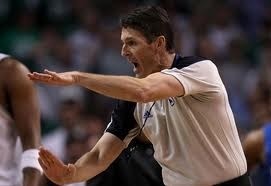
When I was in high school, I would often volunteer to referee junior high basketball games. In small towns, there are not a lot of people who can referee and there is no budget so they take what they can get. It just so happens my old school was playing against a team who defeated us in the regional finals the year before. Not only did they beat us, their coach was a bit of a jerk. Twice, she went to the bench and claimed two of her players had one less foul than the score sheet indicated and both times it was her better players. I knew our score keepers and they did not make mistakes like that but being the time that it was she got her way and both had a foul removed.
Fast forward to the next year and there were still residual feeling from the loss coursing through my veins and my maturity was still that of a 16 year old kid. I called a bad game and each time I called a foul on one of her players I was sure to let her know how many they had. There was no disputing the numbers when her players fouled out. I may have even called offensive basket interference on a frustrated kid who grabbed the mesh as the ball was coming down through. In the end, I gave them no chance of winning and my more objective friend pointed out after the game, "Is it fair you called 27 fouls on one team and 5 on the other?" Yeah I messed up.
In all fairness, that is how not to subtly fix a game as a referee. Everyone in the gym except me knew who I was cheering for and it affected the outcome. In the NBA, you would have to be a lot more clever if you wanted to get away with it. EX-NBA referee Tim Donaghy had a lot of his games reviewed after he was charged with betting on NBA games. They found nothing substantial! But that does not mean he didn`t do anything.
Basketball is a game of momentum. It invented the idea of a player being in the zone but like most fires, it is easy to put them out. Teams score in batches but if a referee knows a team is about to go on a run, all it takes is a call or two to stop them. In the Raptor-Nets series, fouls and calls were pretty even. It was the timing of the calls that made all the difference. Raptors were about to go on a run, they would make or miss a call made to deflate it. Nets on a run, whistles are put away to allow it to happen.
Basketball used to be a non-contact sport. Of course that is not possible when you have ten players running at full speed. Fouls are very subjective and thus referees have to decide how they will call games. If they decide to let the players play, it favors teams like Memphis or Indiana. If they call everything, teams like Golden State and Toronto will do better. A foul could be called on pretty much every play. Screens are not perfectly set, clutching and grabbing, box outs, positioning; referees can pick and choose so they control a lot more than we give them credit for.
Basketball also lends itself to bang-bang plays which could go either way; a charge/block make it easy to swing the game. They are so difficult to make, it is pretty much a three way coin flip; if you include the non-call. Ref wants a quick shift, give a player a charge and it goes the other way. Frustrate the player in the zone and make them lose their cool. Even a travel or lack of a travel call could knock someone off their game. It rarely looks obvious and that makes it even scarier.
In the end you hope the players decide the game. Unfortunately, the NBA has had too many convenient episodes to assume no funny business happens; how was New York Mr. Ewing? If they want a team to advance, I am sure they can let the referees know who will go to the next round. While they cannot demand the outcome, they can certainly stack the deck!