The United States Will Win a World Cup by 2034
I know. I know. This is crazy and will never happen.
The United States is not a soccer country.
We will never win the greatest tournament in all of sports.
The highest the USA has ever finished is 3rd place and that was in 1930 when there were only 13 teams in the whole tournament. Then from 1950-1990, we did not qualify in nine straight tries. Since 1990, we have qualified for each World Cup, but our best finish was the quarterfinals in 2002 in which we controversially fell 1-0 to Germany partially because the referee missed a blatant handball that blocked what would have been an equalizer for the US (absolutely terrible call). In Brazil in 2014 we had our chances, mostly because Tim Howard is a superhero, but were knocked out in extra time by a talented Belgium side in the round of 16. So, with all of this being said, we clearly do not have what it takes to take the next step on the global soccer stage.
BOLD PREDICTION: The United States will win a World Cup in the next five tournaments.
I am going to break my reasons down into two categories: Social growth and talent growth.
Social Growth
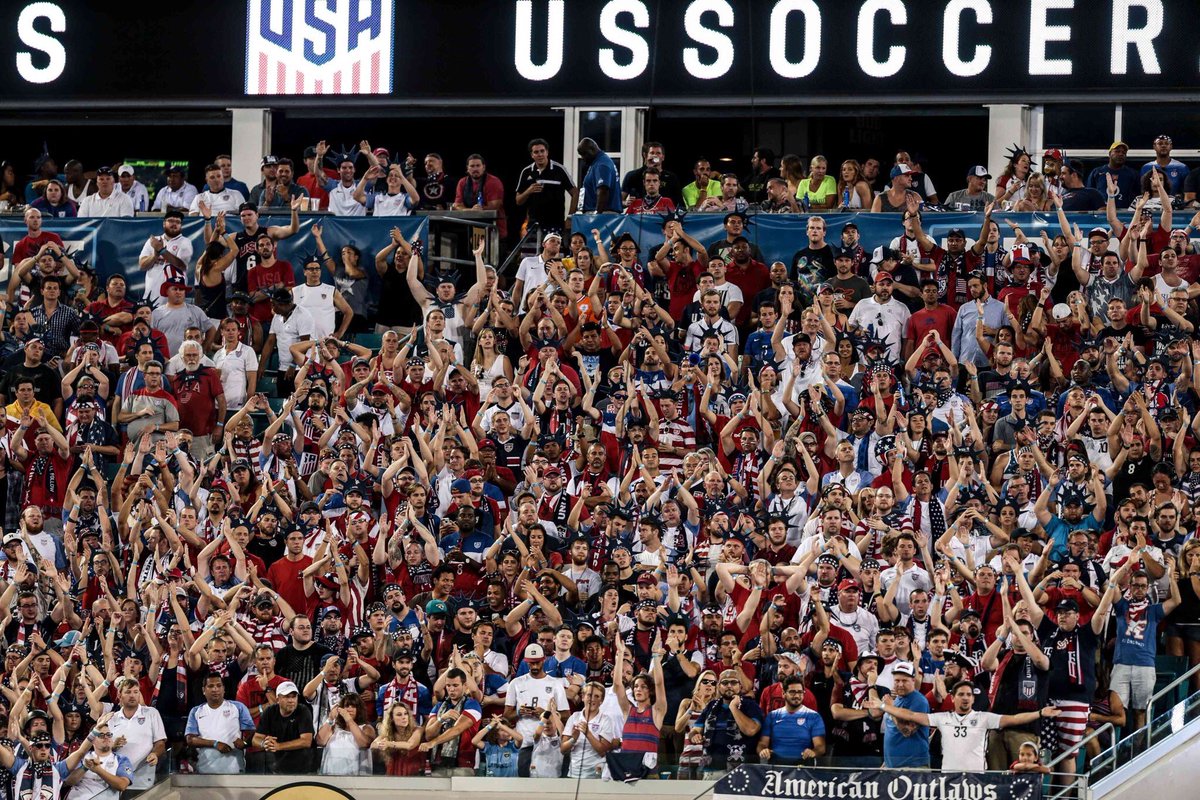
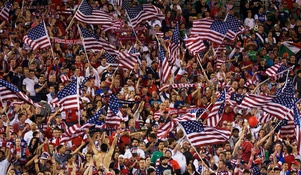
USMNT vs. Trinidad & Tobago September 6, 2016 in Jacksonville, Florida. Can you find me in the picture?
Soccer has arrived in the United States and is growing and an extraordinary rate amongst consumers/fans. Here are some stats to prove it:
1. More Americans watched the 2015 Women's World Cup Final between the USA and Japan than the NBA Finals or the Stanley Cup Finals.
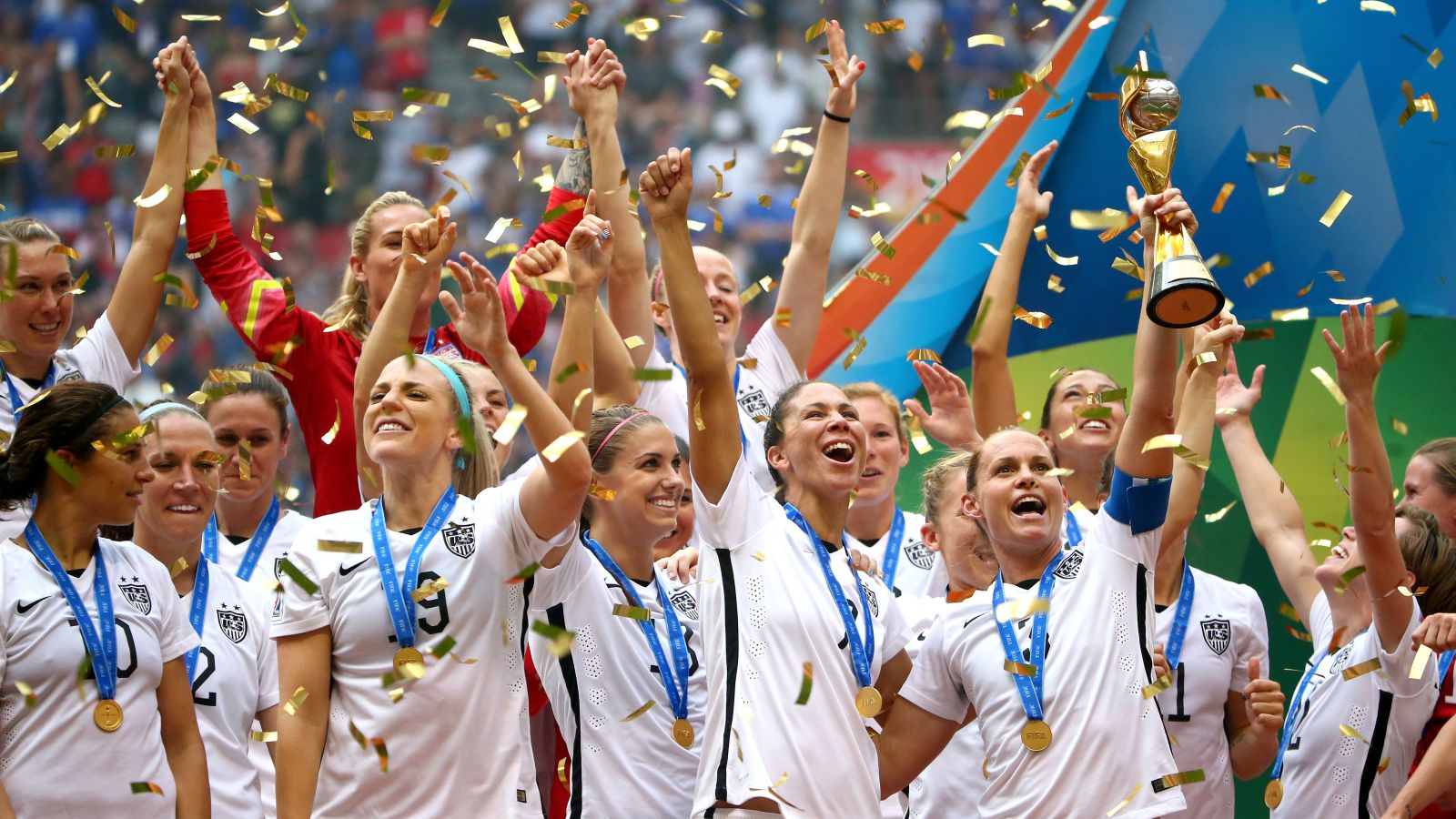
The United States defeated Japan 5-2 to win the 2015 FIFA Women's World Cup.
2. According to an ESPN survey, MLS has passed Major League Baseball and the NHL in popularity among 12-17 years olds trailing the NBA and the NFL.
3. In 2014, the Wall Street Journal reported that 3 million kids are participating in youth soccer, twice as many than tackle football and a million more than baseball.
4. The MLS is expanding rapidly, adding teams each year. More teams means more fans, and the existing teams are drawing bigger crowds by the year. The MLS actually has a higher attendance average the Ligue 1 (the French top division) with 21,574 and is barely behind Serie A (the Italian top division)
My hometown team, Atlanta United, has already sold a league record 22,000 season tickets and there is still almost 6 months until the inaugural season kicks off.
Shanna Lockwood-USA TODAY Sports
5. European leagues are growing in popularity as well. With Fox televising UEFA Champions League and Bundesliga matches and NBC broadcasting the English Premier League, American fans are able to watch hundreds of European games each season. Also, with the International Champions Cup, many big clubs come to the States during their preseason. In fact, in summer of 2014, over 109,000 people filled Michigan Stadium to watch Real Madrid play Manchester United.
6. Soccer's presence in social media is expanding exponentially. According to Adobe Digital Index (ADI) data analysis, U.S. social media buzz for events like UEFA Champions League is doubling every year. ADI’s data is drawn from more than 60 million social mentions from Twitter, Facebook, Youtube, Reddit, Flickr, Instagram, Tumblr, Disqus, Foursquare, Google+, Wordpress and other leading social sites.
7. Large US businesses are investing in soccer both domestically and abroad. Major U.S. sponsors such as AT&T, Visa, Anheuser-Busch, Nike, General Motors, and McDonald’s are donating millions of dollars to soccer training and building infrastructure and facilities for children, youth, coaches, pros and the national team. GM signed a $600 million deal to have the Chevrolet logo on Manchester United's jersey. Even smaller companies such as VisitFlorida (Fulham FC) have shirt sponsorship deals with European clubs.
Check out this link for more specifics on the information I used as well as some more reasons: https://www.umbel.com/blog/sports/10-data-points-prove-soccer-has-made-it-in-america/
These social growths will only benefit my second area of emphasis -
Talent Growth
1. We have the $$$$$$. The United States has all of the resources necessary to build a top tier national team. With all of the money being put into youth soccer, kids will become better players and play for higher caliber clubs. There are over 80 developmental clubs currently for MLS, EPL and Serie A teams in the states. With professional teams keeping tabs on youth talent from a young age, players will be able to possibly play for some of these teams, which in Serie A and the EPL are some of the best teams in the world. Top talent can be developed in the US.
2. By the number of kids playing alone, the odds of developing more talent increase. With kids dropping baseball and football in favor of soccer, some very good athletes may end up playing professional soccer instead of in the NFL. Imagine a Russell Westbrook or Julio Jones type athlete with great foot skills playing as a striker.
GAME OVER.
Interesting fact: Odell Beckham Jr. was a youth soccer star until he was 14 when he decided to focus on football. He chose to not pursue soccer because he did not want to leave his family and move away to the closest MLS academy or to Europe to develop his skills. I would say that his decision worked out well in the end. However, with the growth of youth academies, players may not have to move in order to become great players or play for top teams.
3. Bob Bradley, former USMNT head coach, is the manager at Swansea City, making him the first American to coach in the Premier League. Maybe he can bring American talent to the Swans thus exposing more players to the best league in the world. Just a thought.
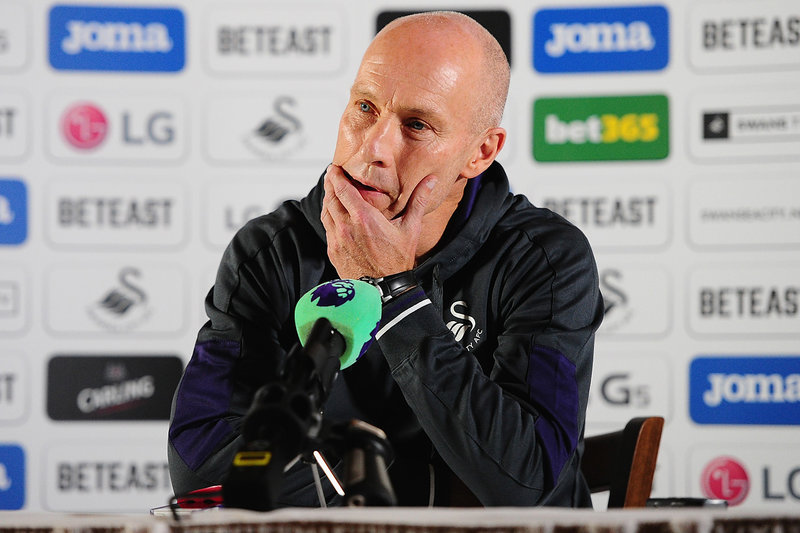
Bob Bradley coached the United States from 2006-2011.
4. With decent showings internationally in recent years, the United States has established themselves as an above average team. The fact that drawing 2-2 with Portugal at the 2014 World Cup was actually a disappointment proves that we have come a long way on the global soccer stage. We are also arguably the best team in CONCACAF, and should continually battle with Mexico for that top spot. In fact, since 2000 is 13-5-6 against our brothers south of the border, including four straight 2-0 wins at home during World Cup Qualifying. That being said, I can't not post a video about the infamous Dos a Cero scoreline.
Is it November 11th yet?
5. This is the most important point of this whole article.
The players in our system have tons of potential. We have a good amount of young players being picked up by teams in the world's top leagues.
In the Premier League there is Cameron Carter-Vickers (Tottenham, 18 years old), Lynden Gooch (Sunderland, 20), Emerson Hyndman (Bournemouth, 20), Gedion Zelalam (Arsenal, 19), Matt Miazga (Chelsea on loan at Vitesse, 21) as well as Deandre Yedlin who has EPL talent but is at Newcastle and Danny Williams who plays at Reading, both in the English 2nd division but still respectable clubs.
In Germany's top division, the Bundesliga, we have 16 players, most notably John Brooks (Hertha Berlin, 23), Julian Green (Bayern Munich, 21), Bobby Wood (Hamburger SV, 23), and probably our best player Fabian Johnson at Borussia Mönchengladbach, who at 28 isn't super young but still has some years left.
Oh, and this guy...
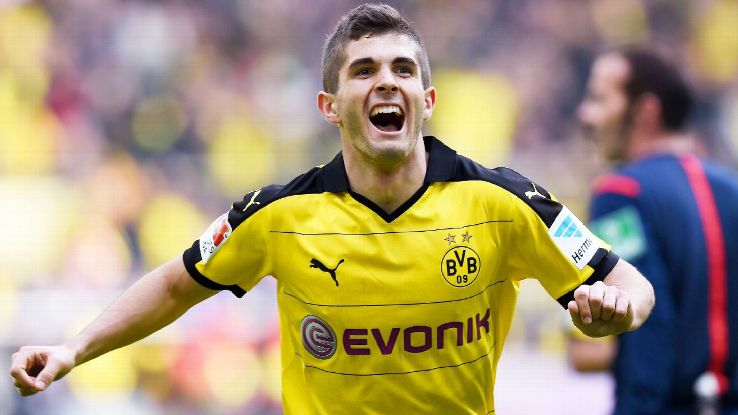
The future of American soccer, Christian Pulisic, who has already been names Bundesliga Player of the Week and only just turned 18. The kid should be in high school and instead played against Real Madrid in the UCL recently. He has the potential to be the international superstar the United States has been waiting for.
With these players, as well as many playing at a high level in the MLS, Liga MX and other leagues, the future looks bright. Not to mention, there are kids in the youth system who we have not even heard of yet, a system that has won a few small international tournaments at different age groups over the past year. Who knows? Our best future player could be 11 years old right now playing on some field in Nebraska dribbling slalom through corn stalks.
I look forward to the future of American soccer. It looks bright under Klinsmann with the World Cup probably coming back to the States in 2026, we could have home field advantage with a very dangerous team.
I truly do believe that we will win.